Creating a Personal Brand as an Artist: A Step-by-Step Guide

Creating a personal brand as an artist means making your creative identity clear, recognizable, and easy to connect with. It brings your artwork, artist statement, portfolio, online presence, and professional communication into alignment without forcing your work into a commercial template.
A strong artist brand cannot replace artistic quality. It can, however, help the right viewers, clients, curators, galleries, and collaborators understand what you do and remember why it matters. Use the following sequence as a practical foundation, then adapt it as your practice develops.
Define Your Artistic Identity
Your artistic identity is the combination of your medium, themes, influences, strengths, and distinctive perspective. Define these elements before designing logos or choosing social media colors, because the brand should grow from the work itself.
Start by reviewing 10 to 20 pieces you consider representative of your practice. Look for recurring evidence rather than isolated experiments:
- Medium: painting, illustration, sculpture, photography, ceramics, printmaking, digital art, installation, or a combination.
- Themes: memory, place, identity, ecology, folklore, technology, family, movement, or another recurring concern.
- Influences: artists, communities, materials, landscapes, books, music, and experiences that shape your decisions.
- Strengths: color, composition, storytelling, material technique, research, portraiture, world-building, or conceptual development.
- Perspective: the particular way you interpret a subject that another artist might approach differently.
Write three short lists: “I repeatedly make,” “I care about,” and “I do differently.” Then combine the strongest patterns into one working sentence, such as: I create layered mixed-media paintings about coastal memory, using found materials and fragmented maps. This is not a permanent definition. It is a useful compass for your portfolio and public communication.
Choose Your Niche and Target Audience
A creative niche gives your work context, while a target audience identifies the people most likely to value it. Focusing your message makes an artist easier to understand and remember, even when your studio practice includes experimentation.
A niche does not have to mean one subject, one product, or one visual style forever. It can describe a combination of medium, subject, method, and audience. For example, “editorial botanical illustration for independent magazines” is more specific than “I make art,” while still leaving room for different projects.
Consider which audience you want to reach first:
- Collectors who respond to a particular subject or material.
- Art directors seeking illustration or commissioned work.
- Galleries and curators interested in a coherent body of work.
- Interior designers looking for artwork with a specific scale or atmosphere.
- Students, peers, or general viewers who follow your process and ideas.
Next, match your audience to their needs. A gallery may need an exhibition-ready series and a clear biography. A commercial client may need licensing information, availability, and a reliable contact path. Your core artistic identity can stay consistent while the emphasis changes.
One common mistake is choosing a niche only because it appears profitable. If the subject does not sustain your curiosity, the content and portfolio will eventually feel forced. Choose a direction that is both recognizable to others and meaningful enough for you to explore repeatedly.
Craft Your Artist Statement and Brand Message
An artist statement explains what you create, why you create it, and how your approach gives the work meaning. Your brand message is the shorter, clearer version used in profiles, introductions, project pages, and professional conversations.
Build the statement from three questions:
- What do you make, and which materials or methods do you use?
- What subjects, questions, or experiences guide the work?
- What distinctive choices shape the viewer’s experience?
A useful artist statement usually needs 100 to 200 words, not a dense explanation of every intention. Replace vague phrases such as “I explore the human condition” with observable details: “I use stitched photographs and handwritten notes to examine how family stories change across generations.” Specific language gives the reader something concrete to understand.
Then create a one-sentence brand message for quick introductions: I am a textile artist who turns archival family photographs into large-scale pieces about migration and memory. Use this sentence on your website introduction, social media biography, email signature, and networking materials, adapting the wording to fit each setting.
Read the statement aloud. If it sounds unlike the way you speak, simplify it. Your statement should invite attention, not create distance through unnecessary academic language. For guidance on copyright and creative ownership, artists can also consult information from the U.S. Copyright Office.
Build a Consistent Visual Identity
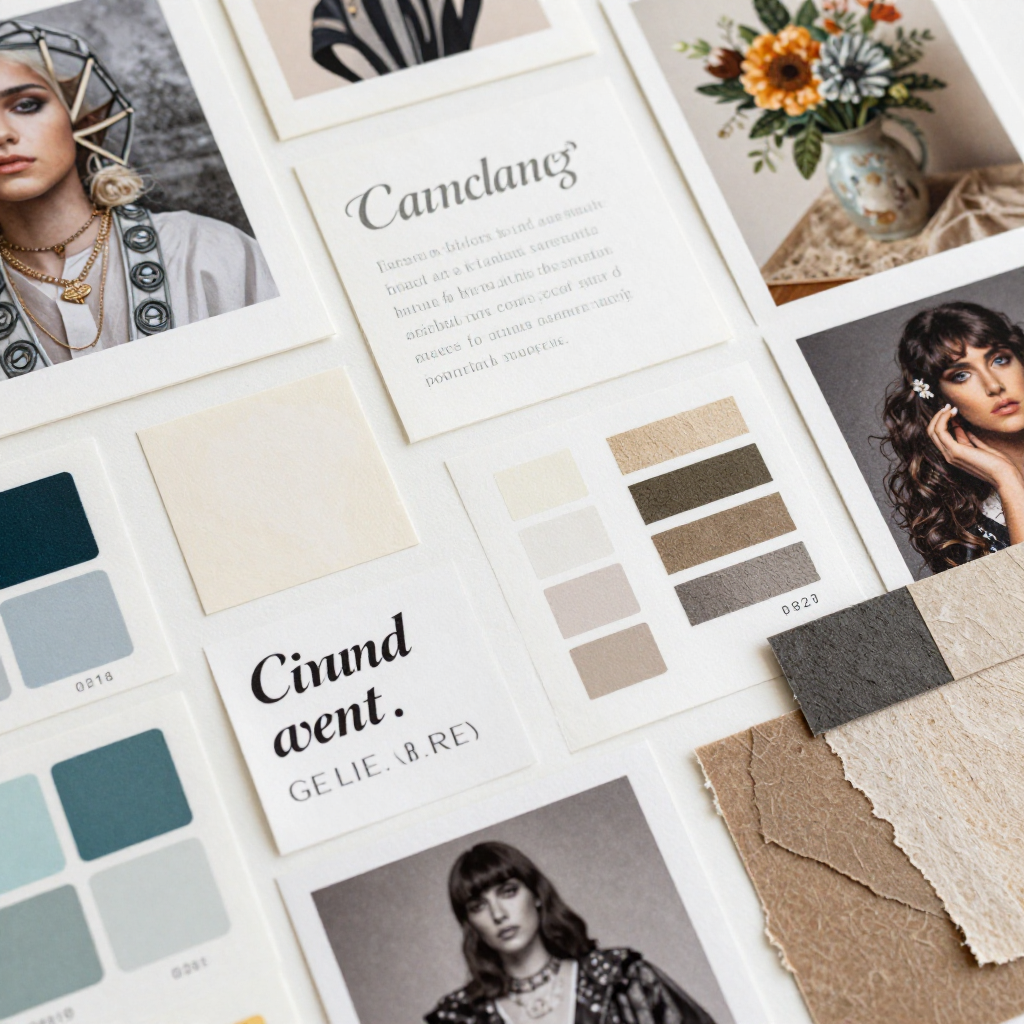
A visual identity is the recurring visual language that connects your artwork, artist portfolio, photography, typography, and public channels. Consistency should make your work recognizable, not make every page look identical.
Begin with the elements that affect trust most directly:
- Artwork photography: use even lighting, accurate color, sharp focus, and consistent cropping. Include detail images when texture matters.
- Color: choose a restrained supporting palette for your website and documents, while allowing the artwork’s own colors to lead.
- Typography: select one readable typeface for body text and, if needed, one complementary display style for headings.
- Portfolio presentation: use consistent image ratios, spacing, captions, and navigation so viewers can focus on the work.
- Recurring elements: consider a signature, material detail, studio angle, framing style, or writing rhythm rather than relying only on a logo.
Think of your visual identity as a flexible set of rules. A minimalist photographer may use generous white space and precise captions. A street artist may use bold documentation, location details, and energetic typography. Both can be coherent without applying the same template.
Choose professional presentation for the elements viewers need to trust: image quality, spelling, dimensions, dates, and contact information. Choosing elaborate design for visual impact means accepting more maintenance, so keep the system simple enough to update consistently.
Create or Refine Your Artist Portfolio
An artist portfolio should present your strongest, most relevant work in a clear sequence with enough context to support professional decisions. It should answer three questions quickly: what do you make, what does the work look like, and how can someone contact you?
Curate before you design. Select a focused group of approximately 12 to 25 strong pieces, depending on your medium and purpose. Remove work that is technically weak, poorly documented, or unrelated to the direction you want to develop. A smaller, coherent portfolio often communicates more effectively than a large archive.
Organize projects for easy understanding
Group work into series or projects rather than displaying an undifferentiated image grid. Each project page can include a title, year, medium, dimensions, a brief description, and several well-sized images. For installations, show both close details and views that explain scale and spatial relationships.
Include an accessible biography, artist statement, résumé or exhibition history where relevant, and a direct contact route. If you accept commissions, explain the process, typical scope, and inquiry requirements. Do not publish private information such as a home address unless it is necessary for your professional practice.
Test the portfolio on a phone as well as a desktop. Check loading speed, image cropping, navigation labels, broken links, and whether a visitor can reach your contact page within two or three clicks. Ask someone outside your immediate artistic circle what they remember after viewing it. Their response can reveal whether your intended message is actually visible.
Share Your Brand Across the Right Channels
Share one core identity across selected channels, then adapt the format and level of detail to each audience. You do not need to maintain every social media platform; a dependable website and one or two suitable channels are often more valuable than scattered activity.
Use your artist portfolio website as the stable source of truth. Social media can show process, works in progress, finished pieces, studio decisions, exhibitions, and relevant opportunities. Email newsletters can offer deeper updates to people who have chosen to hear from you. In exhibitions and networking conversations, your one-sentence brand message provides a natural introduction.
A sustainable content strategy can follow a simple four-part rotation:
- Work: finished artwork, new series, available pieces, or installation views.
- Process: sketches, material tests, revisions, and studio routines.
- Ideas: research, references, questions, and the context behind a project.
- Professional activity: exhibitions, publications, open calls, collaborations, or workshops.
For example, one new series might produce a portfolio project, three process posts, one short statement about its theme, and an email update. This approach turns existing practice into useful content instead of requiring constant performance. Keep captions specific and avoid claiming that every post is a major announcement.
Review, Evolve, and Strengthen Your Brand
Review your artist brand every three to six months and update it when your work, audience, or professional goals change. A personal brand should develop with your artistic identity rather than freeze an early version of it.
Use a practical audit based on four signals:
- Clarity: Can a new visitor describe what you make after viewing your portfolio?
- Consistency: Do your website, social profiles, artist statement, and introductions communicate the same core ideas?
- Evidence: Do the selected projects support the claims in your message?
- Connection: Are the people contacting or following you aligned with your goals?
Track meaningful responses rather than vanity metrics alone. Save thoughtful comments, relevant inquiries, exhibition invitations, repeat visitors, newsletter replies, and portfolio referrals. A post with fewer views may be more valuable if it reaches a curator or client who understands the work.
Update weak points one at a time. Replace poor images first, then revise unclear project descriptions, then refine the artist statement. Avoid changing your colors, logo, niche, and website structure every few weeks; constant redesign can hide the real issue, which is often inconsistent work documentation or an unclear offer.
Use this short action plan:
- Audit your strongest 20 artworks and identify recurring themes.
- Write a working identity sentence and define a primary target audience.
- Draft a plain-language artist statement and one-sentence introduction.
- Photograph and curate a focused portfolio of representative projects.
- Choose a simple visual system and two channels you can maintain.
- Review audience response and professional opportunities after 90 days.
Frequently Asked Questions
How do I define my brand as an artist?
Define your brand by identifying recurring qualities in your medium, themes, influences, strengths, and perspective. Combine those findings with the audience and opportunities you want to reach, then express the result through your work, artist statement, portfolio, and communication.
Do artists need to choose one niche?
No. A niche can be a current area of focus rather than a permanent restriction. Keep multiple interests if they are connected by a clear method, concern, or point of view, and organize them into separate portfolio series when necessary.
What should an artist portfolio include?
An artist portfolio should include strong representative work, organized projects, accurate titles and specifications, artwork descriptions where helpful, an artist statement, biography, relevant résumé or exhibition history, and clear contact information.
How often should I update my artist brand?
Review it every three to six months, with smaller updates whenever you complete a significant series, change your professional focus, or notice repeated confusion from viewers. Update content regularly, but redesign only when the current system no longer supports the work.
Can my personal brand change over time?
Yes. Artistic growth naturally changes an artist’s identity, materials, subjects, and audience. Preserve the underlying values that connect your practice while allowing your visual identity, artist statement, niche, and portfolio to evolve.